

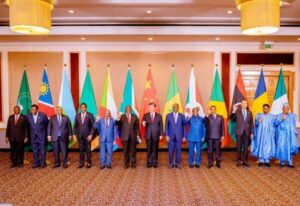
The leaders of the BRICS nations, representing around half of the global population and 40% of global economic output, are gathering in Rio de Janeiro this Sunday for their annual summit. While the main focus is expected to be a unified stance on challenging what they deem as unfair U.S. trade policies, the summit is grappling with deep divisions over ongoing crises in the Middle East.
Since taking office in January, United States (U.S) President Donald Trump has drawn widespread criticism for his hardline trade tactics, threatening both allies and rivals with punitive tariffs.
This summit is set to address the economic uncertainty created by Trump’s trade policies, particularly the imposition of new tariffs on goods from several countries, which are expected to take effect on July 9.
Despite growing frustrations over the U.S. trade stance, sources close to the summit negotiations suggest that any final statement from the BRICS group will avoid mentioning the United States or its president by name.
Instead, it will likely issue a broader political message aimed at Washington.
“We’re anticipating a summit with a cautious tone. It will be difficult to mention the United States by name in the final declaration,” said Marta Fernandez, director of the BRICS Policy Centre at Rio’s Pontifical Catholic University.
The diplomatic situation is especially sensitive for China, which has only recently negotiated with the U.S. to lower tariffs in a tit-for-tat trade dispute. Fernandez pointed out that this was “not the right time to provoke further friction” between the world’s two largest economies.

