

By Kio AmachreeW, orldview International
There is a question that Nigeria’s press corps refuses to ask, and its political class has conspired to avoid answering: how, precisely, did Lebanon’s most powerful business families come to hold Nigerian passports — and what laws, if any, did they follow to get them?
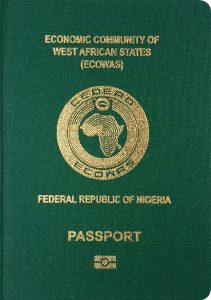
The Nigerian Constitution is unambiguous on the matter. Section 28 of the 1999 Constitution states that a person who is not a Nigerian by birth shall forfeit their Nigerian citizenship if they acquire or retain the citizenship of another country. Furthermore, any registration or naturalisation granted to a person who holds foreign citizenship at the time of that grant is conditional upon the effective renunciation of that foreign citizenship within five months. The law is explicit. It is not a suggestion. It is a constitutional obligation.
Now ask yourself: did the Chagourys renounce Lebanese citizenship? Did they relinquish their British passports? Did they submit to the 15-year residency and character screening that Nigerian nationality law requires of naturalization applicants, including submission of applications to the Ministry of Interior, screening by state agencies, the Immigration Service, the State Security Service, state governors, and ultimately the Federal Executive Council, with final approval from the President of Nigeria? Or did they, as I and many others believe, receive their Nigerian passports through a dictator’s back channel — bypassing every requirement that ordinary Nigerians are bound by?
The record speaks loudly. Gilbert Chagoury was a close associate of General Sani Abacha, who supported his business interests in the country. After Abacha died in 1998, Chagoury was compelled to return an estimated $300 million to the Nigerian government to secure his indemnity from possible criminal charges. A court in Switzerland convicted him of involvement in epic treasury looting and money laundering, after which he agreed to pay a $600,000 fine and return $66 million to the Nigerian government. This is not a Nigerian patriot. This is a man who looted Nigeria alongside its most brutal dictator and bought his way back to respectability.
Yet today, President Bola Tinubu quietly conferred Nigeria’s second-highest national honour, the Grand Commander of the Order of the Niger, on Gilbert Chagoury — with no public ceremony, no presidential statement, and no official citation explaining the decision. The award only entered public view after billionaire Femi Otedola posted a photograph of the certificate on social media. This is the Nigerian state rewarding a man who, in a law-abiding republic, would be under investigation, not receiving medals.
The question of citizenship and passport status is not procedural. It is the central question. Many Lebanese Nigerians hold multiple citizenships, retaining their Lebanese nationality while holding passports from other countries such as the United Kingdom. That is not the same as being a Nigerian. That is managing a portfolio of nationalities like a portfolio of investments — using Nigerian citizenship when it is commercially convenient and retreating behind foreign passports and foreign courts when accountability comes knocking. Chagoury has dual citizenship in Lebanon and the United Kingdom and yet he holds a Nigerian passport as well, apparently without anyone in authority demanding the constitutional renunciation that the law requires of naturalised citizens.
This double standard is an insult to every Nigerian who has been forced by circumstance or aspiration to obtain foreign residency or citizenship through lawful means. Nigerians who naturalise abroad and wish to return — who wish to vote, hold office, or participate in public life — are held to strict constitutional requirements. Those same Nigerians face a 32% visa refusal rate in the United Kingdom and a 67% visa refusal rate in the United States. They travel the world on a passport that opens almost no doors. Meanwhile, Lebanese businessmen embedded in Nigerian politics carry Nigerian papers that they apparently obtained through a dictator’s patronage, while simultaneously holding the Lebanese and British passports that give them real global mobility — and real legal cover.
The Nigerian media’s role in this scandal is a chapter of its own. Outlets that would crucify an ordinary Nigerian for minor infractions routinely describe men like the Chagourys as “Nigerian-Lebanese” philanthropists, as if a shared criminal conviction with a military kleptocrat is a form of civic contribution. They photograph them at state banquets, publish their charitable donations to foreign hospitals and Lebanese universities, and carefully avoid the only question that matters: by what legal process did these men become Nigerians?
Wikipedia describes state capture as a type of systemic political corruption in which private interests significantly influence a state’s decision-making processes to their own advantage. Gilbert Chagoury elevated it to an art targeting resource-rich and vulnerable countries and finding ways to attach a puppet string to the neck of their presidents. Nigeria has been his primary laboratory for five decades. In 2024, the Tinubu government awarded the $11 to $13 billion Lagos-Calabar Coastal Highway project to Chagoury’s Hitech Construction Company without a public competitive bidding process, drawing criticism from opposition politicians and civil society groups who argued that the award violated procurement rules.
State capture does not announce itself. It arrives wearing a passport that may not be legally valid, carrying contracts that were never competitively tendered, and accepting national honours at ceremonies no one is allowed to photograph.
Nigeria must demand answers. The National Assembly must demand a full accounting of how Lebanese businessmen with documented Swiss money laundering convictions, active British and Lebanese passports, and primary residences in Paris and Beverly Hills came to hold Nigerian citizenship and what, if anything, was renounced to obtain it. The Nigerian Immigration Service and Ministry of Interior must open their records. And the Nigerian press must stop acting as a public relations agency for men whose relationship with this country has been extractive from the first day.
The law is the same for all of us — or it means nothing for any of us.

