

A new report jointly released by the World Health Organization (WHO) and the United Nations Children’s Fund (UNICEF) has revealed that over 14.3 million children globally have never received a single dose of any vaccine. This figure surpasses the 2024 target by four million and shows an increase compared to 2019, the baseline year for measuring global immunisation progress. Though there were slight improvements in coverage from 2023, experts warn that these gains are not enough to meet the Immunisation Agenda 2030 goals.
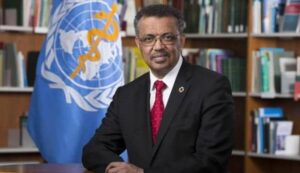
WHO Director-General, Dr. Tedros Ghebreyesus, emphasised that vaccines are vital for the wellbeing of individuals and communities. He noted that despite some progress, challenges such as misinformation and reduced international aid are slowing global vaccination efforts. UNICEF Executive Director Catherine Russell echoed this concern, calling for urgent action to overcome misinformation, fragile healthcare systems, and limited access due to conflict, so no child is left vulnerable to preventable diseases.
The report highlights that a significant proportion of unvaccinated children live in conflict-affected regions. Out of 26 fragile countries, over 5.4 million children remain unvaccinated, up from 3.6 million in 2019. These countries face major barriers such as disrupted supply chains, instability, and weak health infrastructures. Additionally, even previously high-performing upper-middle and high-income countries are now showing signs of slippage in immunisation coverage.
On a positive note, low-income countries supported by Gavi, the Vaccine Alliance, made significant strides in expanding access to vaccines, including those for HPV, polio, and measles. For instance, HPV vaccine coverage rose from 17% in 2019 to 31% in 2024, largely due to national campaigns and a simplified single-dose schedule. However, measles remains a concern, with over 30 million children still under-protected, leading to a rise in outbreaks across 60 countries last year.
To address these issues, WHO and UNICEF are calling on governments to close funding gaps, particularly for Gavi’s next cycle (2026–2030), and to integrate immunisation into primary healthcare systems. They also stress the importance of combatting vaccine misinformation, improving data collection, and increasing domestic investment to reach the most vulnerable populations. Without urgent action, decades of progress in global immunisation could be reversed.

