

Former Head of State, Yakubu Gowon, on Wednesday, called for the permanent closure of the era of military rule in Nigeria, emphasising that, despite the imperfections of democracy, it remains the best system for national progress.
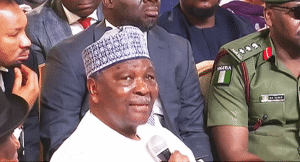
Gowon made the statement in Abuja during the unveiling of the book titled “Military Factor in Nigerian History, 1960-2018”, a publication by the Historical Society of Nigeria (HSN) to mark the association’s 70th anniversary.
This book featured the reflections on the military’s role in Nigeria’s history. While acknowledging the significant contributions of the military in Nigeria’s development, particularly in ensuring peace and advancing economic growth, Gowon emphasised that the military must now focus solely on defending the country’s territorial integrity, not engaging in governance or politics.
The era of military governance is and must remain behind us. Democracy, despite its imperfections, provides the best framework for national development and popular participation.
“The armed forces must fully embrace their constitutional role as defenders of the nation’s territorial integrity, not as administrators or political actors,” he added.
Gowon, who chaired the event, acknowledged the complex legacy of the military in Nigeria’s national history. He explained that the military’s involvement in governance is neither a simple tale of heroism nor villainy but a nuanced part of Nigeria’s journey. The question of whether the military has been a hero or villain in Nigeria’s development journey is perhaps the most contested.
“With the wisdom that comes from age and reflection, I believe the answer lies somewhere in between,” Gowon said.
He praised the military for its role in preserving national unity during the Civil War, building infrastructure, creating states to bring the government closer to the people, and restoring order when civilian structures faltered. Additionally, he highlighted the military’s success in peacekeeping operations both in Africa and beyond.
However, Gowon also acknowledged the darker aspects of military rule. “I must acknowledge that military rule stifled democratic development, sometimes violated civil liberties, and created structures that enabled corruption,” he remarked.
Reflecting on the interruptions to Nigeria’s democratic journey, Gowon cited the military coups of 1966 and 1983, as well as the annulment of the June 12, 1993 elections, as dark chapters in the country’s history. He called for an honest confrontation with these events in order to pave the way for a brighter, more democratic future.
“The interruption of our democratic journey in 1966, 1983, and the annulment of the June 12, 1993 elections represented dark chapters in our history that we must confront honestly. However, by acknowledging these mistakes, we pave the way for a brighter, more democratic future,” Gowon said.

