

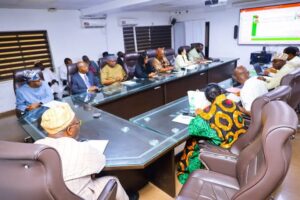
The National Malaria Elimination Programme (NMEP), in collaboration with the National Population Commission NPC and technical support from the World Health Organization (WHO), inaugurated a Survey Management Committee to conduct the 2025 Nigeria Malaria Indicator Survey (NMIS), held 7th August 2025 at the Federal Ministry of Health and Social Welfare.
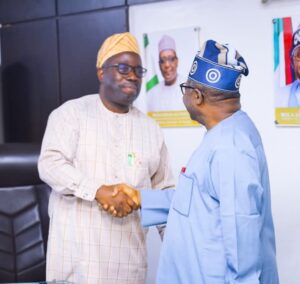
The Chairman of National Population Commission (NPC), Hon. Nasir Isa Kwarra, attended the inauguration of the Survey Management Committee for the 2025 Nigeria Malaria Indicator Survey (NMIS), held at the Federal Ministry of Health and Social Welfare (FMoHSW) office in Abuja.
The Committee, composed of members from various ministries, departments, and agencies (MDAs) as well as non-governmental organizations (NGOs), is co-chaired by Hon. Kwarra and the Coordinating Minister of Health and Social Welfare, Prof. Muhammad Ali Pate.
This survey marks the third independent Malaria Indicator Survey in Nigeria, following similar surveys conducted in conjunction with the Demographic and Health Surveys (DHS) in 2008, 2013, 2018, and 2023-24.
In his opening remarks, NPC Chairman, Hon. Kwarra emphasized the importance of the NMIS as a critical national exercise aimed at addressing malaria, a significant public health challenge in Nigeria. He highlighted that the disease disproportionately affects vulnerable populations, particularly children under five and pregnant women. Hon. Kwarra noted that effective interventions depend on reliable and timely data, which the NMIS is designed to provide.
“The 2025 NMIS will serve as a vital tool that provides evidence-based data for monitoring malaria control efforts, tracking progress, identifying service delivery gaps, and guiding targeted programs,” he stated. objectives.
Coordinating Minister of Health and Social Welfare, Prof. Muhammad Ali Pate while inaugurating the Committee, announced that over 90% of the funding for the 2025 NMIS comes from the Government of Nigeria through the World Bank-supported IMPACT project. This underscores Nigeria’s capacity to mobilize resources for addressing critical health issues.

